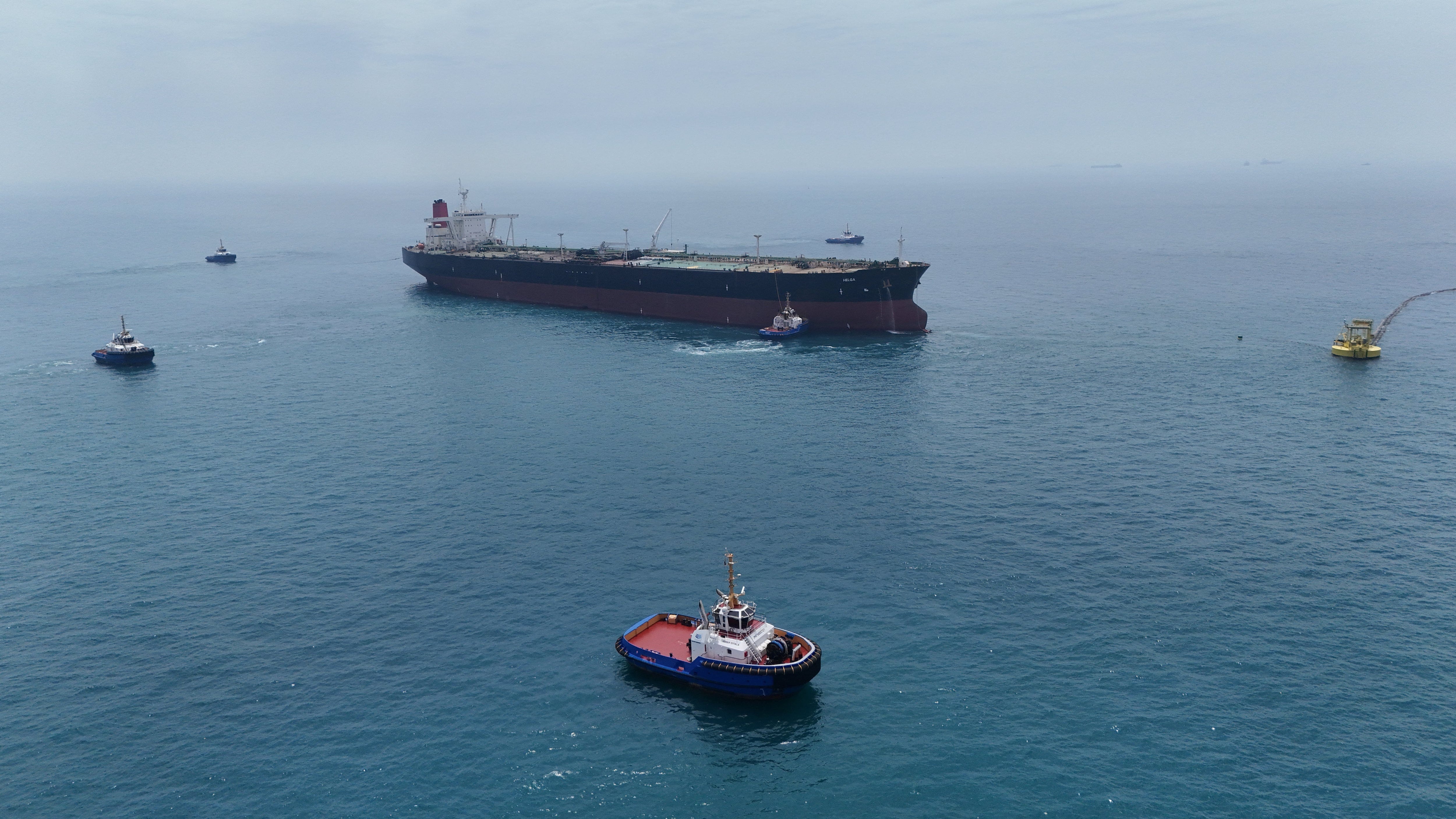
Is the West Asia war back on? This was the question on everyone’s minds after the US, Iran and Israel exchanged strikes over the past two weeks. First it was Israel’s operations in Lebanon. Then Iran’s missile strikes on Israel and Israeli counterstrikes. Then it was the downing of a US military helicopter and US retaliatory strikes in Iran. Then it was the US strike on a commercial ship alleged to be running the blockade. An unusual amount of fire for a ceasefire.
US President Donald Trump’s statements through the week varied from calls to Israel and Iran to “end to the shooting”, to calling on Iran “to start signing on the paper” to saying Iran “will pay the price ” and vowing to “hit Iran very hard” if a peace deal is not finalised. Oil prices have gone up again.
Two patterns are clear: Even as the US wants to exit the war, neither Israel nor Iran is tired nor done with the war. The US is willing to use force to get Iran to sign the peace deal it wants, while Iran is willing to risk military confrontations to reverse the pressure and hang on to its conditions.
Here’s what we can discern of the three belligerents’ current perspectives on the war:
For Iran, the war has battered its economy, and its ports continue to be under a US blockade. And yet, Iran continues to exercise a hold on the Strait of Hormuz and charge sums upto USD 2 million per ship to pass the strait. Iran has continued to put up a strong position in negotiations with the US. In the ongoing talks with the US, Iran’s negotiating strategy appears to be flexible on giving up on pursuit of nuclear weapons, as this has been its publicly stated position all along. But agreeing to no enrichment and handover of enriched uranium may be unpalatable as Iran sees bomb-threshold status as an insurance against future attacks by Israel. A permanent non-aggression pact with the US is a stated goal of the talks, but Iran may not push hard on this, as Iran does not trust the US on any such commitment at this point. The most puzzling point in the talks has been Iran’s demand that the US allow release of relatively low amount of USD 24 billion in frozen Iranian funds. The amount falls well short of the initial Iranian demand of compensation for the war, and is much smaller than the total quantum of Iran’ funds frozen across the world. So why 24 billion? One possibility is that Iran wants the release of funds stuck in the banks of US allies like Japan, Republic of Korea and Qatar. This process would involve unblocking Iran’s bank accounts in these countries. This in turn may help these countries – which have bought enormous quantities of Iranian oil in the past - to resume purchase of Iranian oil and deposit the money in these accounts at a not too distant point in the future. For this very reason, the US seems to be hesitant in agreeing to the release of these funds as part of the talks. Also, as seen in the downing of the US helicopter and the earlier alleged downing of a US Unmanned aerial vehicle, Iran has turned the Strait of Hormuz into de facto territory now and is willing to risk military confrontation with the US over its control. Is this merely a tactic to negate US pressure at the negotiating table? Or is it an effort to keep the international attention on the conflict which adds pressure on the US to agree to Iran’s conditions? Eitherways, international shipping is unlikely to feel confident about crossing the strait for now.
On occasion, it has felt like Tel Aviv has the ability to stem or resume the war at will. For Israel, there is almost no scope to be a party to the US-Iran talks. For Prime Minister Netanyahu who has been explicit in his desire to see regime change in Iran, any deal between the US and Iran is likely to fall short of its expectations. The structure of the talks too does not permit a role for Israel and there is no indication that the US invited Israel to join them. In this context, Israel’s reported snooping of the US-Iran talks is to be expected. But the fact that the US has allowed this news to come out suggests that Washington wants Israel to accept the outcome of the talks, whatever they may be. Israel is currently focused on its war in Lebanon against Hezbollah. Israel may want to wipe out Hezbollah’s strength in Lebanon before the US-Iran talks come to an end. From Israel’s perspective, doing so would ensure that post-talks, an emboldened Iran does not resume asymmetric warfare against Israel. Within Israel, the war in Lebanon has been linked to security for the population along the border, and hence the continuation of the war may help ruling Likud in the upcoming elections.
For Washington, there appear to be four priorities in negotiating with Iran: defending Israel; keeping global oil prices stable through a permanent re-opening of the Strait of Hormuz; ensuring Iran does not pursue nuclear weapons again; ensuring that there is no threat from Iran to US forces in the region in a manner that would tie down US troops or distract them from their focus on China. A new priority for Washington appears to be keeping Israel in check, so that the Netanyahu government’s actions in the region - when not coordinated with the US - do not compel the US to intervene again in Israel’s defense. For the US, maintaining an upperhand in tit-for-tat attacks happening in parallel has become crucial to maintain leverage at the negotiating table with Iran. The targets chosen for US strikes are also a form of messaging to Iran. The strikes on the water reservoirs in Iran’s Hormuzgan province are a message that if Iran doesn’t sign on a peace deal quickly, its critical infrastructure could be targeted. Iran - the fourth most water-deficient country on the planet which is facing a scorching summer this year – cannot afford to take this threat lightly.
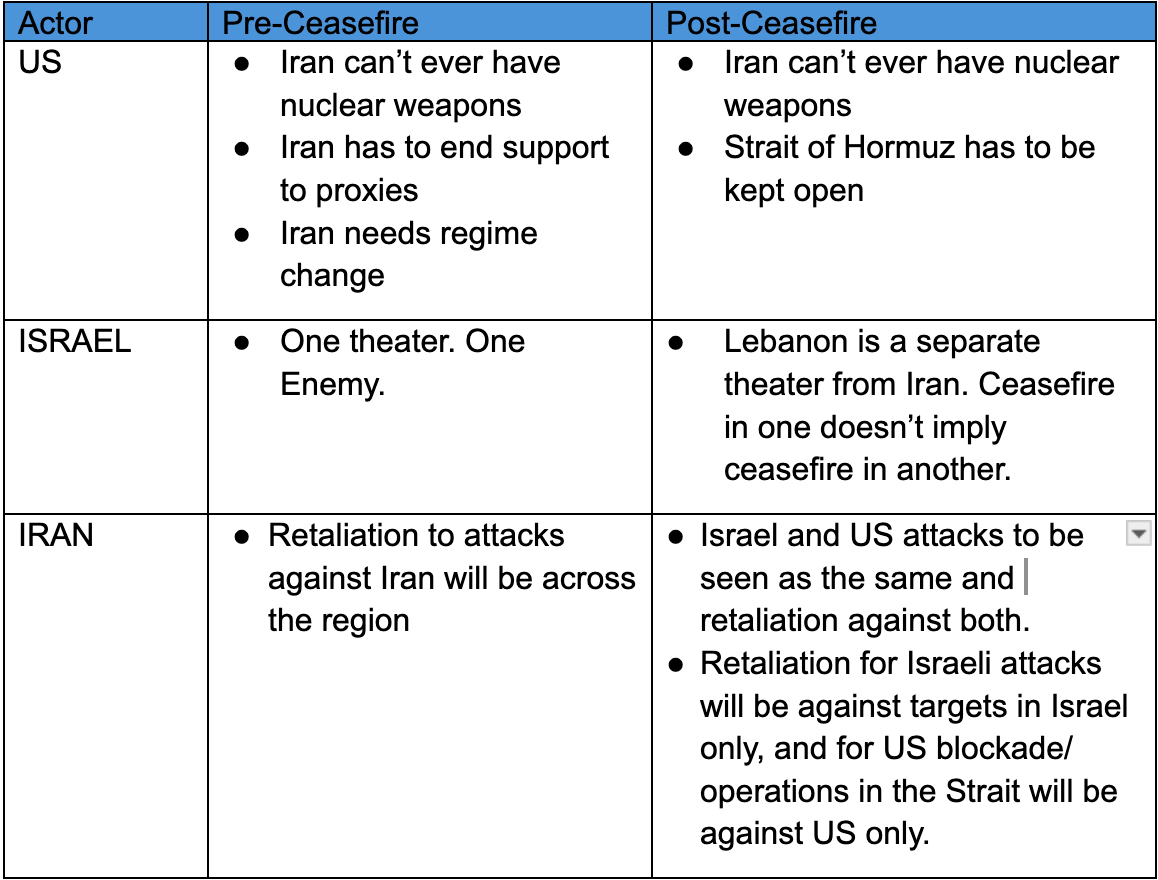
In the last three months, the West Asia conflict has evolved in some interesting ways, especially since the ceasefire:
Israel initially depicted all theaters of the war as part of the larger hostility with Iran. But Israel now appears to be disconnecting the Lebanon war from the Iran war, so that a ceasefire or truce on one front does not imply the same in another front.
Iran initially retaliated to US and Israeli attacks with a region-wide escalation and targeted the Gulf countries. But now, Iran is differentiating between Israeli and US operations. Thus, in response to Israel’s Lebanon operations, Iran hit only targets in Israel, and in response to US operations in the Strait, Iran only targeted US targets in the Gulf. This is far more directed than what we saw in March.
The US initially aimed at achieving a number of goals in the war. This included the end of Iran’s support to Iranian affiliated groups such as Hezbollah and Iraqi militias. But now, the US appears to be leaving out those goals from its negotiations with Iran. Keeping the Strait of Hormuz open permanently has become a priority instead.
Thus, each of the parties to the conflict that attempted to change the calculus of the other parties, has found its own priorities recalibrated by the war. This recalibration is likely to continue till July, when domestic pressures arising from the parliamentary campaign in Israel and the mid-term elections campaign in US may start to compel some changes in each country’s postures. Iran’s calculation may thus be wait it out and drag the talks on till at least July. Whether the increasingly hard economic situation in Iran will change this calculus for Tehran remains to be seen. For now, the war is far from over.
If you’d like to receive this monthly West Asia briefing and more in-depth research on the region, please subscribe.
Open Takshashila Course
West Asia: Crossroads in Conflict
Learn the nuances of West Asia’s history, its ideological faultlines and why West Asia matters more today than ever before in this 5-week course. Take a deep dive into the politics and society of the nations that are defining the region, and how the world’s powers have engaged West Asia for the past century.
Leave the course with an unparalleled understanding of what’s at stake in West Asia and how it is reshaping the world order.
The programme is led by Raja Karthikeya, Adjunct Fellow leading West Asia studies at the Takshashila Institution. His areas of research include geopolitics of West Asia, peace mediation, counter-terrorism, nuclear disarmament and the impact of climate change on peace & security.